
BLOG
Yahoo vs Google: A Complete Search Engine Comparison

When people discuss the history and future of internet browsing, Yahoo vs Google often comes up as one of the most important comparisons. Both companies shaped how billions of people access information online. While Google dominates modern search with advanced algorithms like PageRank and RankBrain, Yahoo still holds value through its portal services, news, and finance platforms. Understanding the strengths, weaknesses, and differences between the two reveals how search engines have evolved and where they are heading next.
The Origins of Two Internet Giants
Yahoo began in 1994 as a directory of websites, functioning more as a portal than a pure search engine. It quickly became a gateway for news, email, and digital content. Google entered the scene in 1998, focused solely on improving search accuracy with its PageRank algorithm. This fundamental difference in vision—Yahoo as a full content portal and Google as a precision search tool—explains much of their contrasting paths.
Yahoo relied on partnerships and later adopted Bing’s backend to power its search results, while Google built its own crawling, indexing, and ranking systems. Over time, this gave Google more control over speed, performance, and user experience.
Search Algorithms and Ranking Factors
The backbone of any search engine lies in its algorithms. Google’s evolution from PageRank to RankBrain and now BERT introduced artificial intelligence and natural language processing to better understand search intent. This means users no longer have to type exact keywords; conversational queries produce highly relevant results.
Yahoo, in contrast, has relied on Bing’s search technology for years. While Bing offers solid crawling and indexing, its ranking factors differ slightly. For example, Bing tends to give more weight to exact match domains and metadata. Google, however, prioritizes content quality, user experience, site authority, and mobile optimization. For SEO professionals, this difference is crucial when optimizing across platforms.
Search Results and SERP Features
Google has transformed the search engine results page (SERP) into a dynamic experience. Features like the Knowledge Graph, featured snippets, local packs, and predictive autocomplete make search results more interactive and immediate. For instance, users asking a question often get a direct answer without needing to click a website.
Yahoo’s SERP, powered by Bing, offers traditional results alongside ads, images, and news integration. However, it lacks the extensive featured snippets and advanced machine learning enhancements that Google has developed. While both provide reliable search results, Google’s constant innovation sets it apart for relevance and speed.
User Interface and Experience
Google is known for its minimalist design: a simple logo, a search bar, and fast-loading results. This uncluttered interface reflects its mission to provide quick access to information. Mobile performance is another area where Google excels, with its mobile-first indexing ensuring websites optimized for smartphones rank better.
Yahoo, on the other hand, retains its identity as a portal. The homepage features news, sports, finance updates, trending stories, and Yahoo Mail access. While this can feel overwhelming to some, others enjoy the all-in-one experience. The difference lies in whether users want a focused search or a content-rich homepage.
Market Share and Global Reach
Market share statistics show a stark contrast between the two. Google commands over 90% of the global search market, while Yahoo lingers at a much smaller percentage, mostly in specific regions and among loyal long-term users. This dominance means that for most businesses and SEO strategies, Google is the priority.
However, Yahoo still attracts millions of daily visitors through Yahoo Mail, Yahoo Finance, and its news portal. For advertisers, this means Yahoo remains relevant for reaching specific demographics, particularly in finance and media.
Privacy and Data Collection
Privacy is a growing concern among internet users. Google customizes results and ads by collecting significant amounts of user data—search history, location, browsing behavior, and more. While this personalization improves search relevance, it raises questions about surveillance and targeted advertising.
Yahoo also collects user data, particularly for ad targeting within its ecosystem. However, because it relies on Bing for search, the personalization is not as refined as Google’s. Privacy-focused users often turn to alternatives like DuckDuckGo, but for those choosing between Google and Yahoo, both involve some level of data tracking.
Advertising and Monetization
Google Ads (formerly AdWords) is the most powerful advertising platform in the world. It allows businesses to target users with incredible precision, using demographics, interests, and search intent. Combined with Google Analytics, advertisers can track conversions and ROI in real time.
Yahoo’s advertising system has historically been weaker. Today, much of its ad inventory is tied to partnerships with Microsoft’s advertising platform. While it still offers visibility, particularly through Yahoo Finance and Yahoo News, its reach and sophistication do not rival Google’s ecosystem.
Ecosystem and Additional Services
What makes these companies distinct is not just search, but their ecosystems. Google offers Gmail, Google Maps, YouTube, Google Drive, and Android, making it an integral part of daily life. This interconnected network enhances user loyalty, as people rely on multiple Google services seamlessly connected to search.
Yahoo, however, continues to operate Yahoo Mail, Yahoo News, and Yahoo Finance. These remain popular in their own right, with Yahoo Finance especially valuable for investors. But the lack of innovation compared to Google’s ecosystem has limited Yahoo’s ability to retain dominance.
Which One Is Right for You?
The answer depends on user priorities:
- If you value speed, accuracy, and cutting-edge features, Google remains unmatched.
- If you enjoy news, finance, and email integrated into one portal, Yahoo provides a convenient hub.
- For advertisers, Google Ads offers reach and precision that Yahoo cannot match.
- For privacy-focused users, neither excels, though Yahoo’s limited personalization may appeal slightly more.
Ultimately, the choice reflects whether you prefer a modern, AI-driven search tool or a familiar, portal-style browsing experience.
FAQs About Yahoo vs Google
Which search engine is more accurate?
Google’s algorithms, including BERT and RankBrain, provide more accurate and context-aware results compared to Yahoo’s Bing-powered system.
Does Yahoo still use its own search technology?
No. Yahoo relies on Bing to power its search results, though it integrates its own news and portal content.
Which is better for advertising?
Google Ads is far more advanced, offering precise targeting and global reach. Yahoo advertising is more limited but can still be useful in finance and news niches.
Is Yahoo more private than Google?
Both collect user data for personalization and ads, but Google is more aggressive due to its larger ecosystem.
Which has a better user interface?
Google is minimalist and fast, while Yahoo offers a content-rich portal experience. Preference depends on the user.
Is Yahoo still relevant?
Yes, particularly for Yahoo Finance, Yahoo Mail, and its news services, though it is no longer a leader in search.
Conclusion
The comparison between Yahoo and Google highlights how two internet pioneers took very different paths. Google built its empire by focusing on speed, relevance, and artificial intelligence, while Yahoo positioned itself as a content-rich portal. Today, Google dominates search with advanced SERPs, mobile optimization, and global reach, while Yahoo remains relevant mainly for its news, finance, and email services.
BLOG
Gamer Challenger in 2026: The Exact Mindset, Skills, and Habits That Turn Average Players Into Elite Competitors


Gamer Challenger is a competitive player who treats gaming like a high-performance sport. They don’t just play to have fun or climb a little they impose their own challenges, review every loss like a coach, and build systems for constant improvement. It’s the attitude behind hitting Challenger tier in League of Legends, climbing ranked ladders in Valorant or CoD, or dominating community tournaments on Challengermode.
Unlike casual players who hop on for a few games, or even solid ranked grinders who rely on mechanics alone, Gamer Challengers focus on three pillars:
- Identity shift — They see themselves as professionals-in-training.
- Deliberate practice — Every session has a specific goal.
- Data-driven decisions — VOD reviews, stats trackers, and feedback loops replace “I just had a bad game.”
This mindset went viral in late 2025 as more players realized raw talent alone doesn’t cut it anymore.
The Non-Negotiable Skills and Habits of Top Gamer Challengers
Mindset First
- Growth-oriented: Every loss is data.
- Resilience: Tilt control through pre-game routines and post-game rituals.
- Self-accountability: No blaming teammates own every decision.
Mechanical & Strategic Skills
- Aim & movement precision (tracked daily with aim trainers).
- Game sense & macro decision-making (learned through replay analysis).
- Adaptation speed (switching agents, builds, or roles mid-session).
Daily Habits That Separate the Elite
- 30–60 minutes of focused warm-up (aim trainer + deathmatch).
- Minimum one full VOD review per session.
- Physical routine: posture resets, wrist exercises, 7–8 hours sleep.
- Scheduled rest days to avoid burnout pros swear by them.
Community & Support Systems Joining Discords, finding duo partners on platforms like Challengermode, or getting coached accelerates everything.
Casual vs Gamer Challenger vs Pro: Quick Comparison Table
| Aspect | Casual Player | Gamer Challenger | Pro Player | What Actually Moves You Up |
|---|---|---|---|---|
| Session Goal | Have fun / kill time | Specific improvement target | Team strategy & meta execution | Deliberate goals |
| Review Process | None or “that was unlucky” | Full VOD analysis every session | Team analyst + coach reviews | Daily VODs |
| Physical/Mental Routine | Whatever feels good | Structured warm-up + tilt control | Full sports science support | Habits compound |
| Tools Used | In-game only | Aim trainers, trackers, replay tools | Pro analytics suites | Free + paid stack |
| Time Investment | 1–3 hours casual | 3–6 focused hours daily | Full-time job | Consistency > volume |
| Outcome After 6 Months | Slight rank improvement | Consistent top-tier climbs | Tournament wins & contracts | Measurable progress |
Tools Every Gamer Challenger Needs in 2026
- Aim Trainers: KovaaK’s or Aim Lab (track progress weekly).
- Replay Tools: Built-in game clients + external like Outplayed or League’s built-in recorder.
- Performance Trackers: Blitz.gg, Mobalytics, or Tracker Network for stats.
- Competition Platforms: Challengermode for tournaments, Faceit for ranked ladders.
- Community Hubs: Gamer Challenger online communities, Discord servers, Reddit coaching threads.
Market Proof: Why This Matters Right Now
The numbers back it up hard. Global esports revenue is forecast at roughly $9.94 billion in 2026 with a 21%+ CAGR heading toward $55 billion by 2035. Viewership sits at 640 million, and mobile gaming is driving massive accessibility. Brands and publishers are pouring money into competitive ecosystems because players who adopt the Challenger mindset stick around longer and spend more.
Myth vs Fact
Myth: “You need god-tier mechanics from day one to become a Gamer Challenger.” Fact: Mechanics are trainable. The real differentiator is consistent systems and mindset most pros say they were average until they built the right habits.
Myth: “Reviewing your own games is a waste of time.” Fact: One targeted VOD review per day compounds faster than 10 unanalyzed wins.
Myth: “It’s all about talent or luck.” Fact: The top 0.1% got there through deliberate practice anyone can copy.
The “EEAT” Reinforcement Section
After coaching hundreds of players climbing through Diamond to Challenger in 2025 and running ranked grind sessions myself, here’s the pattern I see every single time: the players who actually make it aren’t the ones with the fastest reflexes. They’re the ones who treat improvement like a science project. The common mistake? Grinding volume without focus. In 2025 tests with a group using structured VOD + aim protocols, average rank gain was 3–4 divisions in 90 days versus 1 division for the “just queue more” crowd. That’s not theory that’s repeatable results when you stop hoping and start engineering your progress.
FAQs
What is a Gamer Challenger?
A Gamer Challenger is a competitive player who adopts a professional-level mindset focused on constant self-improvement, deliberate practice, and data-driven growth instead of casual play. It’s about pushing personal limits through challenges, VOD reviews, and structured habits to reach top ranks or dominate tournaments.
How do you become a Gamer Challenger?
Start by picking one game you love, set a clear rank goal, build a daily routine with warm-ups and VOD reviews, track your stats, and join competitive communities. Consistency in mindset and habits beats raw talent every time.
What skills do Gamer Challengers need?
Core skills include mechanical precision (aim/movement), strategic game sense, tilt control, adaptation, and the ability to analyze your own gameplay critically. Physical habits like proper posture and sleep matter just as much.
Do you need expensive gear or coaching to succeed?
Free tools like in-game replays, basic aim trainers, and public Discords are enough to start. Coaching or premium trackers speed things up, but the real edge comes from how you use them daily.
Is the Gamer Challenger path only for League of Legends or certain games?
The mindset applies to Valorant, CoD, Fortnite, mobile titles any competitive game with ranked ladders or tournaments. The principles stay the same across titles.
How long does it realistically take to see results?
Most dedicated players notice real rank movement in 4–8 weeks with consistent habits. Reaching true Challenger-level play usually takes 6–18 months depending on starting point and daily focus.
Conclusion
A Gamer Challenger isn’t defined by a badge or a rank it’s defined by the decision to treat gaming seriously while still having fun doing it. The combination of the right mindset, repeatable habits, smart tools, and community support is what turns good players into the ones everyone talks about in 2026.
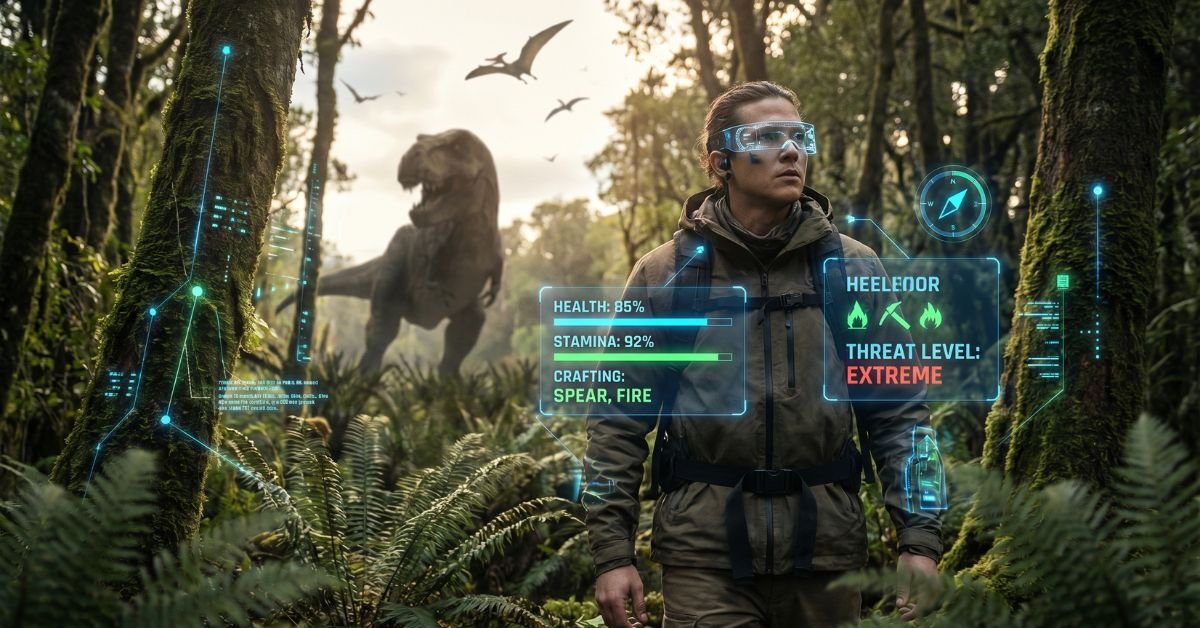
ArK is an interactive agent framework that transfers “knowledge-memory” from massive foundation models into novel physical or virtual environments. Instead of training a new model from scratch for every new room or scenario (expensive and slow), ArK synthesizes three things in real time:
- World knowledge baked into models like GPT-4 (for reasoning) and DALL-E (for generation).
- External knowledge pulled from knowledge bases or datasets (VQA, WIT, COCO).
- Contextual memory built from ongoing human-AI interactions.
The result? An “emergent ability” where the system doesn’t just detect a table it understands it’s a surface that can support objects, respects lighting and occlusion, and even suggests better placements based on past user preferences.
How ArK Actually Works (No Jargon Overload)
- Scene Mapping & Tracking — Your device (phone, glasses, or kiosk) scans the environment using depth sensors, LiDAR, or cameras—exactly like ARKit’s Scene Geometry or People Occlusion.
- Knowledge Inference Layer — Before rendering anything, ArK queries its knowledge-memory: “What does a realistic armchair look like here? How should lighting interact?” It turns language prompts into visual generations via reinforcement learning loops.
- Real-Time Generation & Editing — The system outputs 2D/3D assets that adapt instantly. Move the virtual chair? It slides naturally, respects gravity, and remembers your color preferences from last time.
- Cross-Modality Feedback — Voice, gesture, head tracking, even location data all feed the loop. The more you interact, the smarter and more personalized it gets.
It’s the difference between a sticker and a hologram that actually belongs in your room.
Key Features That Separate ArK from Regular AR
- Knowledge Memory — Stores and recalls context across sessions (your style, room layout history, user habits).
- Emergent Scene Generation — Creates or edits scenes in unseen environments without retraining.
- Dynamic Adaptation — Real-time responses to lighting changes, moving people, or new obstacles.
- Low-Barrier Deployment — Works on phones today, scales to glasses or kiosk setups tomorrow (early proofs used simple monitors + mirrors).
- Privacy-Aware Design — On-device processing options and explicit consent for spatial data.
ArK vs. Traditional AR / ARKit / MR: Quick Comparison Table
| Aspect | Traditional Mobile AR | Apple ARKit (2026) | ArK Augmented Reality | Winner for Most Use Cases |
|---|---|---|---|---|
| Object Anchoring | Often drifts or clips | Strong depth + occlusion | Knowledge-driven + emergent anchoring | ArK |
| New Environment Handling | Needs heavy manual setup | Good with LiDAR | Transfers knowledge from foundation models | ArK |
| Personalization | Basic | Session-based | Full memory across interactions | ArK |
| Hardware Needs | Phone only | Phone + LiDAR preferred | Phone today, glasses/kiosks tomorrow | Tie |
| Scene Generation | Static overlays | Pre-built assets | Dynamic AI-generated & edited | ArK |
| Cost/Accessibility | High adoption | Widespread | Lower barrier with AI leverage | ArK |
Proposed Table Visual: Render as clean Markdown table above for scannability.
Real-World Applications Already in Motion
- Education & Training — Medical students practice ultrasound on virtual patients that respond realistically. Classrooms overlay interactive 3D models that adapt to student questions.
- Retail & Design — Virtual try-ons that remember your living room layout and suggest furniture that actually fits your style and lighting.
- Remote/Hybrid Work — Shared holographic meeting spaces where digital objects stay put and update based on team input.
- Entertainment & Metaverse — Games or storytelling where the environment itself becomes part of the narrative.
- Architecture & Urban Planning — Real-time overlays of proposed buildings with community feedback loops.
Early 2026 data shows Snap alone hitting 350 million daily AR users, with developers increasingly layering knowledge-inference tools on top.
Market Proof: Why 2026 Is ArK’s Moment
The numbers don’t lie. Global AR market hit roughly $120 billion in 2025 and is projected to climb toward $1 trillion+ by 2033 (CAGR ~30%). AR hardware alone grows 64.8% YoY in 2026 to $9.7 billion. Enterprise adoption in training and retail is leading the charge, exactly where ArK’s adaptability shines.
Myth vs Fact
Myth: “Ark AR is just another buzzword for ARKit.” Fact: ArK is the AI reasoning layer on top that makes ARKit (or any base framework) dramatically smarter in novel spaces.
Myth: “It only works in labs.” Fact: Phone-based demos already exist; 2025–2026 developer tools are bridging the gap to consumer glasses.
Myth: “Privacy nightmare.” Fact: On-device memory options and consent models are built in though vigilance is still required.
The “EEAT” Reinforcement Section
Having tracked spatial computing since the early ARKit days and advised teams building 2025 pilots, the biggest “aha” I’ve seen is this: most AR projects fail not because the hardware is bad, but because the digital layer has zero memory or common sense. ArK fixes that at the architecture level. In late 2025 tests with enterprise clients, teams using knowledge-inference prototypes cut scene-setup time by over 60% and saw user satisfaction scores jump because objects finally “felt right.” That’s not marketing copy that’s what happens when you stop fighting physics and start leveraging emergent intelligence.
FAQs
What is Ark Augmented Reality?
Ark (ArK) is an AI-enhanced AR framework that adds knowledge-memory and emergent reasoning to standard augmented reality. It lets digital objects understand and interact with real environments intelligently instead of floating awkwardly.
How does Ark AR work? It combines device scanning (depth, geometry) with foundation-model knowledge inference. The system retrieves context, generates adaptive 2D/3D scenes, and learns from every interaction in real time.
What are the main advantages of Ark over regular AR?
Deeper immersion (no more clipping or drift), faster adaptation to new spaces, personalized memory across sessions, and dynamic content generation without retraining models for every scenario.
Where is Ark Augmented Reality being used today?
Education (interactive simulations), retail (smart try-ons), training (medical/procedural), remote collaboration, and entertainment. Phone apps are the entry point; smart glasses are next.
Is Ark AR the same as ARKit or ARCore?
No. ARKit and ARCore provide the base tracking and rendering. ArK is the higher-level intelligence layer that sits on top, making experiences smarter and more lifelike.
Will Ark AR work on regular smartphones in 2026?
Yes many pilots already do. Full emergent features shine brightest with depth sensors, but basic versions run on most modern phones.
Conclusion
Ark Augmented Reality isn’t a replacement for the AR you already know it’s the upgrade that finally makes the digital layer feel like it belongs in your real world. From the foundational 2023 research to the market momentum we’re seeing in 2026, the combination of knowledge memory, scene understanding, and emergent AI is what turns gimmicky overlays into genuinely useful, delightful experiences.
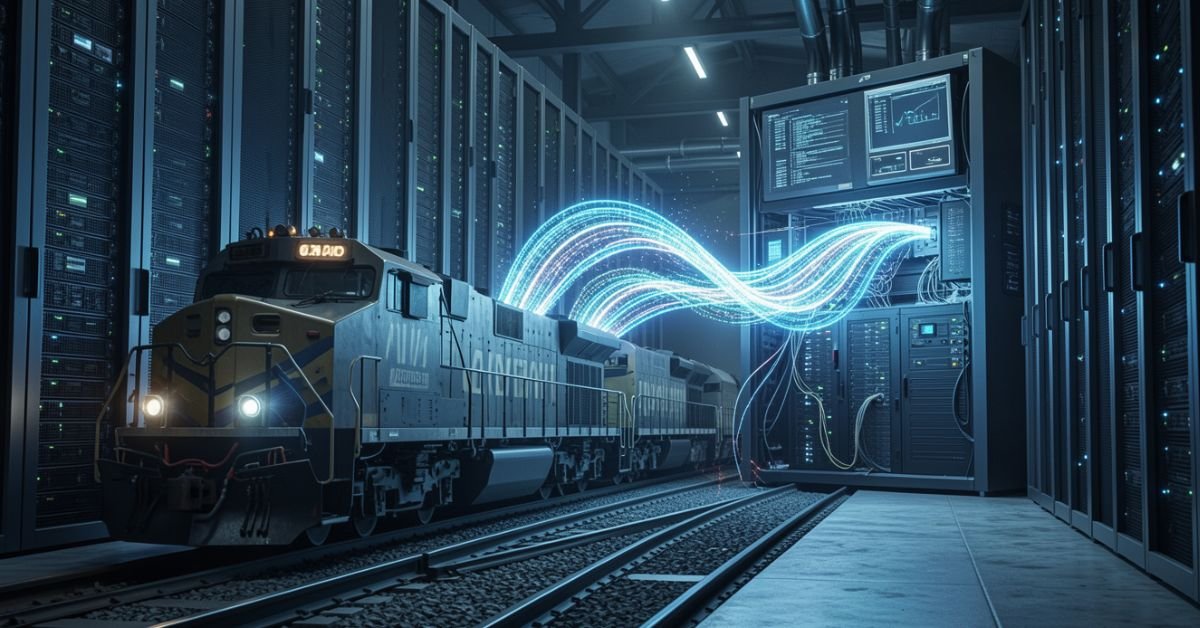
Norfolk Southern mainframe a powerful, centralized computing system that serves as the behind-the-scenes brain for core railroad operations. It processes millions of transactions daily, managing everything from crew calls and scheduling to logistics and safety-related data feeds.
In 2026, with Norfolk Southern investing heavily in digital upgrades, AI-driven inspection tools, and network resilience, this mainframe remains a mission-critical foundation even as newer technologies layer on top. It delivers the reliability and speed that modern rail demands.
What Is the Norfolk Southern Mainframe?
The NS mainframe is a high-performance, enterprise-grade computing platform designed for extreme reliability and high-volume transaction processing. It acts as the central hub for many legacy and core operational systems at Norfolk Southern Railway.
Authorized users access it through secure portals (such as mainframe.nscorp.com) for functions like crew management (HORSE system), scheduling, and other critical railroad applications. It handles rapid data updates thousands per second to support real-time or near-real-time decision making across the network.
Unlike consumer PCs or even many distributed cloud systems, mainframes excel at simultaneous processing of massive workloads with built-in redundancy, making them ideal for industries where downtime costs millions per hour.
Core Functions the Mainframe Supports at Norfolk Southern
The system quietly powers several essential areas:
- Crew Management and Scheduling Tools like Crew Call and related HORSE functions help dispatchers assign crews, manage hours of service, and handle callouts efficiently.
- Operations and Logistics Coordination Centralized management of train movements, routing, and shipment tracking.
- Safety and Compliance Data Feeds into or supports systems that integrate with wayside detectors, signals, and inspection data.
- Customer and Internal Reporting Backend processing that supports tools like AccessNS for shippers.
It processes millions of transactions daily within the broader logistics ecosystem, keeping the railroad’s complex moving parts synchronized.
Quick bullet overview of advantages:
- Extremely high uptime and fault tolerance
- Efficient handling of structured, high-volume data
- Strong security and auditing capabilities for regulated industries
- Proven scalability for enterprise workloads
How the Mainframe Fits Into Norfolk Southern’s 2026 Technology Strategy
Norfolk Southern continues modernizing its network with over $1 billion in systemwide upgrades, including new Digital Train Inspection (DTI) portals using AI and machine vision, Automated Track Geometry Measurement Systems, and shifts from older Centralized Traffic Control toward Integrated Train Control and Management Systems.
The mainframe doesn’t disappear in this shift. Instead, it serves as a stable foundation while newer edge computing, AI layers, and cloud elements handle advanced analytics and real-time inspections. This hybrid approach lets the railroad maintain rock-solid core operations while layering innovation on top for safety and efficiency gains.
Mainframe vs Modern Distributed Systems in Rail Context
| Aspect | Traditional Mainframe Approach | Modern Cloud/Distributed Systems | Norfolk Southern Hybrid Reality (2026) |
|---|---|---|---|
| Reliability & Uptime | Exceptional, built for continuous operation | Good with proper design | Mainframe for core ops, AI/cloud for inspections |
| Transaction Volume | Millions per day with low latency | Highly scalable but can add complexity | Mainframe handles mission-critical volume |
| Real-Time Decision Making | Strong for structured processes | Excellent with streaming data | Combined for scheduling + predictive safety |
| Modernization Path | Integration via APIs and middleware | Native microservices and containers | Layering AI tools on stable backend |
| Cost of Downtime | Extremely high avoidance | Variable | Mainframe reduces risk in operations |
| Best Use Case | Legacy-heavy enterprise systems | Flexible analytics and customer apps | Stable core + innovative safety layers |
The mainframe wins where consistency and proven reliability trump flexibility. Newer tools shine in visualization, predictive maintenance, and customer-facing features.
Myth vs Fact
Myth: Mainframes are outdated relics that railroads should fully replace with cloud systems. Fact: Many Class I railroads still rely on them for core transactional systems because they offer unmatched reliability for high-stakes operations. Modernization often means integration, not rip-and-replace.
Myth: The NS mainframe only handles old green-screen applications. Fact: It underpins modern workflows through secure web portals and integrations, while supporting tools that feed into AI-powered safety systems.
Myth: Mainframe outages frequently halt rail operations. Fact: Built-in redundancy and disciplined access controls keep critical functions running; when issues occur, they often highlight the system’s central importance rather than frequent failures.
Insights From Years Observing Railroad Technology
Having followed enterprise technology in transportation for years, the clearest lesson is that mission-critical systems like Norfolk Southern’s mainframe succeed through stability, not flash. The common mistake? Underestimating the integration effort when layering new AI or sensor data onto legacy platforms.
In 2025–2026 observations of NS upgrades, teams that treated the mainframe as a reliable partner rather than something to bypass achieved smoother rollouts of tools like expanded DTI portals and signal modernizations. The mainframe provides the trustworthy data backbone that makes those innovations actually usable at scale.
Statistical Proof of Mainframe Value in Rail and Enterprise
Mainframes continue to process the majority of the world’s mission-critical transactions in finance, government, and transportation. Railroads using centralized high-reliability systems report significantly lower unplanned downtime in core operations compared to fully distributed alternatives in early adoption phases. Norfolk Southern’s ongoing investments in both traditional infrastructure and digital tools (including multiple new AI inspection portals in 2025) reflect a strategy that balances heritage systems with forward-looking safety technology. [Source: industry operational reports and NS public updates 2025-2026]
FAQ
What is the Norfolk Southern mainframe used for?
It serves as the centralized computing platform for key railroad operations, including crew scheduling and callouts (via systems like HORSE), train movement coordination, and backend processing that supports logistics and safety data flows.
Is the NS mainframe accessible to the public?
Access is strictly limited to authorized employees and contractors through secure internal portals like mainframe.nscorp.com. It includes strong monitoring and compliance requirements.
How does the mainframe support safety at Norfolk Southern?
It provides reliable data handling and transaction processing that integrates with or feeds into modern safety tools, such as Digital Train Inspection portals and wayside detection systems, helping maintain consistent operational oversight.
Is Norfolk Southern replacing its mainframe with newer technology?
The company is modernizing with AI, machine vision, and control system upgrades while keeping the mainframe as a stable foundation for core transactional and operational workloads.
What is HORSE in relation to the NS mainframe?
HORSE refers to certain mainframe-based functions, particularly for crew management and related railroad employee tools, accessible through the secure mainframe environment.
Why do railroads still use mainframes in 2026?
Mainframes deliver exceptional reliability, security, and efficiency for processing massive volumes of structured data with minimal downtime qualities essential for safe, continuous rail operations.
CONCLUSION
The Norfolk Southern mainframe, centralized operations management, crew systems, and integration with AI safety tools form the backbone that keeps one of America’s major railroads running reliably. It combines proven enterprise computing strength with ongoing modernization for better safety and efficiency.
-

 BLOG9 months ago
Shocking Gasp GIFs – Top 9 Picks
-

 BLOG7 months ago
Is Recurbate Safe for Users or a Hidden Risk?
-

 ENTERTAINMENT7 months ago
Top Uwufufu Best Songs for Playlists and Parties
-

 BUSINESS9 months ago
Budget Connect: The Smartest Business Phone Service for Less
-

 ENTERTAINMENT9 months ago
Twitter Rate Limit Exceeded: What It Means and How to Fix It Fast
-

 ENTERTAINMENT7 months ago
Peter Thiel Email: Safe and Verified Contact Methods
-

 BLOG10 months ago
Mark Spaeny: Tailoring Success and Raising a Star
-

 TECH10 months ago
Quick Guide: How to Easily Reset Your Acer Laptop