
BLOG
Perfect Boat Seats for Comfort & Style


Finding the perfect boat seats for comfort and style isn’t just about aesthetics—it’s about enhancing your overall boating experience. Whether you’re fishing at dawn, cruising with family, or spending hours docked under the sun, the right marine seating can make a significant difference. With a vast range of materials, configurations, and ergonomic designs on the market, choosing the ideal boat seat setup has become both an art and a science.
The Importance of Comfortable Marine Seating Perfect Boat Seats
Long hours on the water demand seating that offers adequate support. Boat owners today prioritize not just looks, but lumbar support, shock absorption, and seating ergonomics. Marine-grade foam cushioning and moisture-resistant upholstery play a pivotal role in comfort during extended voyages. High-back captain chairs and swivel seats, for example, provide optimal neck and spine alignment—reducing fatigue over time.
Moreover, comfortable seating improves safety. Passengers who are securely seated in well-designed seats are less likely to lose balance during sharp turns or turbulent waters. Padded armrests and bolstered sides add extra stability, making them particularly popular for center console boats and pontoon crafts.
 Marine-Grade Materials: Built for Durability Perfect Boat Seats
A major consideration when selecting boat seats is the material. Since watercraft seating is exposed to harsh environmental conditions—UV rays, saltwater spray, mildew, and fluctuating temperatures—durable construction is non-negotiable. Most modern marine seats are made with UV-treated vinyl, high-density polyethylene frames, and corrosion-resistant stainless steel or aluminum hardware.
Vinyl is favored for its resistance to sun damage and easy maintenance. Meanwhile, marine-grade foam retains its shape and provides consistent support, even after years of use. For fishing boats or deck boats that endure rugged usage, manufacturers like Wise, Tempress, and Springfield offer models that emphasize both resilience and comfort.
Style That Matches Your Vessel
Comfort is crucial, but style remains an essential component of any boat’s design language. Today’s boat seats are available in an array of colors, patterns, and trims to match your vessel’s interior or exterior. Sleek, minimalist designs are popular in speedboats, while luxury yachts often feature plush, leather-like finishes with diamond stitching.
Folding seats and bench configurations with storage add versatility without compromising appearance. Helm chairs now come with adjustable heights and reclining features that not only look good but function well. Custom embroidery, contrast piping, and high-gloss finishes let owners personalize their seating to reflect their lifestyle.
Types of Boat Seats and Their Applications
Different types of boats require different seating arrangements. Here’s a breakdown of popular boat seat options and where they best fit:
Captain or Helm Seats
Often the most advanced in terms of support and features, captain seats are essential for anyone piloting the boat. Many come with flip-up bolsters for standing visibility, adjustable height pedestals, and integrated cup holders.
Lounge and Bucket Seats
Ideal for recreational boats and speedboats, these seats offer comfort with wraparound support. Bucket seats often have high backs and deep cushioning, making them perfect for sporty rides.
Bench Seats
Common on pontoon boats and deck boats, bench seats provide ample space for multiple passengers. Many designs now incorporate under-seat storage, offering space-saving solutions for life jackets, fishing gear, or coolers.
Fishing Seats
Typically designed for maneuverability and compactness, pedestal-mounted fishing seats are used in bass boats or jon boats. They often feature swivel functionality for 360-degree movement and are lightweight for easy repositioning.
Jump Seats and Flip-Flop Seats
These are popular for boats that need to convert space quickly. Jump seats fold down when needed, and flip-flop seats allow forward- or backward-facing configurations—ideal for small boats or dual-purpose layouts.
Installation and Maintenance Tips
When upgrading or replacing your boat seats, proper installation ensures longevity and safety. Use marine-grade hardware and rustproof fasteners to secure seats firmly. Pedestals and bases should be mounted to reinforced surfaces, especially if the seating is intended for heavy or dynamic use.
Routine maintenance includes wiping seats with a marine vinyl cleaner and applying UV protectant sprays. Avoid harsh chemicals, which can degrade the upholstery over time. During off-season storage, use seat covers or remove detachable seats to store indoors. Preventing mold and mildew buildup is crucial, especially in humid climates.
Top Brands in Marine Seating Perfect Boat Seats
Several reputable brands lead the way in marine seating innovation:
-
Wise Seats: Known for budget-friendly yet durable designs, they offer a wide range of bench and pedestal seats.
-
Tempress: Popular among anglers, Tempress provides ergonomic fishing chairs that prioritize back support and swiveling action.
-
Springfield Marine: Offers high-end helm seats with hydraulic pedestals and modern styling.
-
Attwood: Recognized for their affordability and straightforward designs, Attwood seats are great for smaller boats and DIY replacements.
These manufacturers have built a reputation based on rigorous quality standards and customer trust. Whether you’re looking for a luxury seat or a practical upgrade, choosing a known brand can reduce installation and performance concerns.
Customization and Add-On Features
Today’s marine seats can be enhanced with features like:
-
Built-in coolers
-
Rod holders
-
Bluetooth headrests
-
LED accent lighting
Customization lets you adapt your boat seats for leisure, fishing, or long-distance cruising. You can even choose memory foam padding or waterproof speakers for high-end builds. These additions not only elevate comfort.
 Frequently Asked Questions (FAQs)
Q1: What are the most comfortable boat seats?
A: Captain chairs with high-back support, thick padding, and ergonomic armrests are generally the most comfortable. Brands like Springfield and Tempress offer highly rated models for comfort.
Q2: How do I choose the best material for boat seats?
A: Look for marine-grade vinyl with UV protection and mildew resistance. Frames should be made from anodized aluminum or corrosion-resistant plastic.
Q3: Can I replace my boat seats myself?
A: Yes, many boat seats are designed for DIY installation. Just ensure you use marine-grade hardware and follow weight and mounting guidelines.
Q4: What’s the difference between a helm seat and a bucket seat?
A: A helm seat typically includes adjustment features, armrests, and extra support for long periods of operation, while bucket seats focus on sporty comfort with snug side bolsters.
Q5: Are boat seat covers necessary?
A: Yes, seat covers protect your seats from UV damage, mildew, and moisture—prolonging their life, especially when stored outdoors.
Conclusion
Selecting the perfect boat seats for comfort and style is more than a cosmetic decision—it directly affects your safety, enjoyment, and the longevity of your marine investment. Whether you’re upgrading for aesthetics or replacing worn-out cushions, focus on quality materials, ergonomic design, and compatibility with your vessel’s needs. With brands offering modular, customizable, and stylish options, today’s marine seating is engineered for both performance and luxury. So the next time you hit the water, do it in comfort—and in style.
BLOG
Gamer Challenger in 2026: The Exact Mindset, Skills, and Habits That Turn Average Players Into Elite Competitors


Gamer Challenger is a competitive player who treats gaming like a high-performance sport. They don’t just play to have fun or climb a little they impose their own challenges, review every loss like a coach, and build systems for constant improvement. It’s the attitude behind hitting Challenger tier in League of Legends, climbing ranked ladders in Valorant or CoD, or dominating community tournaments on Challengermode.
Unlike casual players who hop on for a few games, or even solid ranked grinders who rely on mechanics alone, Gamer Challengers focus on three pillars:
- Identity shift — They see themselves as professionals-in-training.
- Deliberate practice — Every session has a specific goal.
- Data-driven decisions — VOD reviews, stats trackers, and feedback loops replace “I just had a bad game.”
This mindset went viral in late 2025 as more players realized raw talent alone doesn’t cut it anymore.
The Non-Negotiable Skills and Habits of Top Gamer Challengers
Mindset First
- Growth-oriented: Every loss is data.
- Resilience: Tilt control through pre-game routines and post-game rituals.
- Self-accountability: No blaming teammates own every decision.
Mechanical & Strategic Skills
- Aim & movement precision (tracked daily with aim trainers).
- Game sense & macro decision-making (learned through replay analysis).
- Adaptation speed (switching agents, builds, or roles mid-session).
Daily Habits That Separate the Elite
- 30–60 minutes of focused warm-up (aim trainer + deathmatch).
- Minimum one full VOD review per session.
- Physical routine: posture resets, wrist exercises, 7–8 hours sleep.
- Scheduled rest days to avoid burnout pros swear by them.
Community & Support Systems Joining Discords, finding duo partners on platforms like Challengermode, or getting coached accelerates everything.
Casual vs Gamer Challenger vs Pro: Quick Comparison Table
| Aspect | Casual Player | Gamer Challenger | Pro Player | What Actually Moves You Up |
|---|---|---|---|---|
| Session Goal | Have fun / kill time | Specific improvement target | Team strategy & meta execution | Deliberate goals |
| Review Process | None or “that was unlucky” | Full VOD analysis every session | Team analyst + coach reviews | Daily VODs |
| Physical/Mental Routine | Whatever feels good | Structured warm-up + tilt control | Full sports science support | Habits compound |
| Tools Used | In-game only | Aim trainers, trackers, replay tools | Pro analytics suites | Free + paid stack |
| Time Investment | 1–3 hours casual | 3–6 focused hours daily | Full-time job | Consistency > volume |
| Outcome After 6 Months | Slight rank improvement | Consistent top-tier climbs | Tournament wins & contracts | Measurable progress |
Tools Every Gamer Challenger Needs in 2026
- Aim Trainers: KovaaK’s or Aim Lab (track progress weekly).
- Replay Tools: Built-in game clients + external like Outplayed or League’s built-in recorder.
- Performance Trackers: Blitz.gg, Mobalytics, or Tracker Network for stats.
- Competition Platforms: Challengermode for tournaments, Faceit for ranked ladders.
- Community Hubs: Gamer Challenger online communities, Discord servers, Reddit coaching threads.
Market Proof: Why This Matters Right Now
The numbers back it up hard. Global esports revenue is forecast at roughly $9.94 billion in 2026 with a 21%+ CAGR heading toward $55 billion by 2035. Viewership sits at 640 million, and mobile gaming is driving massive accessibility. Brands and publishers are pouring money into competitive ecosystems because players who adopt the Challenger mindset stick around longer and spend more.
Myth vs Fact
Myth: “You need god-tier mechanics from day one to become a Gamer Challenger.” Fact: Mechanics are trainable. The real differentiator is consistent systems and mindset most pros say they were average until they built the right habits.
Myth: “Reviewing your own games is a waste of time.” Fact: One targeted VOD review per day compounds faster than 10 unanalyzed wins.
Myth: “It’s all about talent or luck.” Fact: The top 0.1% got there through deliberate practice anyone can copy.
The “EEAT” Reinforcement Section
After coaching hundreds of players climbing through Diamond to Challenger in 2025 and running ranked grind sessions myself, here’s the pattern I see every single time: the players who actually make it aren’t the ones with the fastest reflexes. They’re the ones who treat improvement like a science project. The common mistake? Grinding volume without focus. In 2025 tests with a group using structured VOD + aim protocols, average rank gain was 3–4 divisions in 90 days versus 1 division for the “just queue more” crowd. That’s not theory that’s repeatable results when you stop hoping and start engineering your progress.
FAQs
What is a Gamer Challenger?
A Gamer Challenger is a competitive player who adopts a professional-level mindset focused on constant self-improvement, deliberate practice, and data-driven growth instead of casual play. It’s about pushing personal limits through challenges, VOD reviews, and structured habits to reach top ranks or dominate tournaments.
How do you become a Gamer Challenger?
Start by picking one game you love, set a clear rank goal, build a daily routine with warm-ups and VOD reviews, track your stats, and join competitive communities. Consistency in mindset and habits beats raw talent every time.
What skills do Gamer Challengers need?
Core skills include mechanical precision (aim/movement), strategic game sense, tilt control, adaptation, and the ability to analyze your own gameplay critically. Physical habits like proper posture and sleep matter just as much.
Do you need expensive gear or coaching to succeed?
Free tools like in-game replays, basic aim trainers, and public Discords are enough to start. Coaching or premium trackers speed things up, but the real edge comes from how you use them daily.
Is the Gamer Challenger path only for League of Legends or certain games?
The mindset applies to Valorant, CoD, Fortnite, mobile titles any competitive game with ranked ladders or tournaments. The principles stay the same across titles.
How long does it realistically take to see results?
Most dedicated players notice real rank movement in 4–8 weeks with consistent habits. Reaching true Challenger-level play usually takes 6–18 months depending on starting point and daily focus.
Conclusion
A Gamer Challenger isn’t defined by a badge or a rank it’s defined by the decision to treat gaming seriously while still having fun doing it. The combination of the right mindset, repeatable habits, smart tools, and community support is what turns good players into the ones everyone talks about in 2026.

ArK is an interactive agent framework that transfers “knowledge-memory” from massive foundation models into novel physical or virtual environments. Instead of training a new model from scratch for every new room or scenario (expensive and slow), ArK synthesizes three things in real time:
- World knowledge baked into models like GPT-4 (for reasoning) and DALL-E (for generation).
- External knowledge pulled from knowledge bases or datasets (VQA, WIT, COCO).
- Contextual memory built from ongoing human-AI interactions.
The result? An “emergent ability” where the system doesn’t just detect a table it understands it’s a surface that can support objects, respects lighting and occlusion, and even suggests better placements based on past user preferences.
How ArK Actually Works (No Jargon Overload)
- Scene Mapping & Tracking — Your device (phone, glasses, or kiosk) scans the environment using depth sensors, LiDAR, or cameras—exactly like ARKit’s Scene Geometry or People Occlusion.
- Knowledge Inference Layer — Before rendering anything, ArK queries its knowledge-memory: “What does a realistic armchair look like here? How should lighting interact?” It turns language prompts into visual generations via reinforcement learning loops.
- Real-Time Generation & Editing — The system outputs 2D/3D assets that adapt instantly. Move the virtual chair? It slides naturally, respects gravity, and remembers your color preferences from last time.
- Cross-Modality Feedback — Voice, gesture, head tracking, even location data all feed the loop. The more you interact, the smarter and more personalized it gets.
It’s the difference between a sticker and a hologram that actually belongs in your room.
Key Features That Separate ArK from Regular AR
- Knowledge Memory — Stores and recalls context across sessions (your style, room layout history, user habits).
- Emergent Scene Generation — Creates or edits scenes in unseen environments without retraining.
- Dynamic Adaptation — Real-time responses to lighting changes, moving people, or new obstacles.
- Low-Barrier Deployment — Works on phones today, scales to glasses or kiosk setups tomorrow (early proofs used simple monitors + mirrors).
- Privacy-Aware Design — On-device processing options and explicit consent for spatial data.
ArK vs. Traditional AR / ARKit / MR: Quick Comparison Table
| Aspect | Traditional Mobile AR | Apple ARKit (2026) | ArK Augmented Reality | Winner for Most Use Cases |
|---|---|---|---|---|
| Object Anchoring | Often drifts or clips | Strong depth + occlusion | Knowledge-driven + emergent anchoring | ArK |
| New Environment Handling | Needs heavy manual setup | Good with LiDAR | Transfers knowledge from foundation models | ArK |
| Personalization | Basic | Session-based | Full memory across interactions | ArK |
| Hardware Needs | Phone only | Phone + LiDAR preferred | Phone today, glasses/kiosks tomorrow | Tie |
| Scene Generation | Static overlays | Pre-built assets | Dynamic AI-generated & edited | ArK |
| Cost/Accessibility | High adoption | Widespread | Lower barrier with AI leverage | ArK |
Proposed Table Visual: Render as clean Markdown table above for scannability.
Real-World Applications Already in Motion
- Education & Training — Medical students practice ultrasound on virtual patients that respond realistically. Classrooms overlay interactive 3D models that adapt to student questions.
- Retail & Design — Virtual try-ons that remember your living room layout and suggest furniture that actually fits your style and lighting.
- Remote/Hybrid Work — Shared holographic meeting spaces where digital objects stay put and update based on team input.
- Entertainment & Metaverse — Games or storytelling where the environment itself becomes part of the narrative.
- Architecture & Urban Planning — Real-time overlays of proposed buildings with community feedback loops.
Early 2026 data shows Snap alone hitting 350 million daily AR users, with developers increasingly layering knowledge-inference tools on top.
Market Proof: Why 2026 Is ArK’s Moment
The numbers don’t lie. Global AR market hit roughly $120 billion in 2025 and is projected to climb toward $1 trillion+ by 2033 (CAGR ~30%). AR hardware alone grows 64.8% YoY in 2026 to $9.7 billion. Enterprise adoption in training and retail is leading the charge, exactly where ArK’s adaptability shines.
Myth vs Fact
Myth: “Ark AR is just another buzzword for ARKit.” Fact: ArK is the AI reasoning layer on top that makes ARKit (or any base framework) dramatically smarter in novel spaces.
Myth: “It only works in labs.” Fact: Phone-based demos already exist; 2025–2026 developer tools are bridging the gap to consumer glasses.
Myth: “Privacy nightmare.” Fact: On-device memory options and consent models are built in though vigilance is still required.
The “EEAT” Reinforcement Section
Having tracked spatial computing since the early ARKit days and advised teams building 2025 pilots, the biggest “aha” I’ve seen is this: most AR projects fail not because the hardware is bad, but because the digital layer has zero memory or common sense. ArK fixes that at the architecture level. In late 2025 tests with enterprise clients, teams using knowledge-inference prototypes cut scene-setup time by over 60% and saw user satisfaction scores jump because objects finally “felt right.” That’s not marketing copy that’s what happens when you stop fighting physics and start leveraging emergent intelligence.
FAQs
What is Ark Augmented Reality?
Ark (ArK) is an AI-enhanced AR framework that adds knowledge-memory and emergent reasoning to standard augmented reality. It lets digital objects understand and interact with real environments intelligently instead of floating awkwardly.
How does Ark AR work? It combines device scanning (depth, geometry) with foundation-model knowledge inference. The system retrieves context, generates adaptive 2D/3D scenes, and learns from every interaction in real time.
What are the main advantages of Ark over regular AR?
Deeper immersion (no more clipping or drift), faster adaptation to new spaces, personalized memory across sessions, and dynamic content generation without retraining models for every scenario.
Where is Ark Augmented Reality being used today?
Education (interactive simulations), retail (smart try-ons), training (medical/procedural), remote collaboration, and entertainment. Phone apps are the entry point; smart glasses are next.
Is Ark AR the same as ARKit or ARCore?
No. ARKit and ARCore provide the base tracking and rendering. ArK is the higher-level intelligence layer that sits on top, making experiences smarter and more lifelike.
Will Ark AR work on regular smartphones in 2026?
Yes many pilots already do. Full emergent features shine brightest with depth sensors, but basic versions run on most modern phones.
Conclusion
Ark Augmented Reality isn’t a replacement for the AR you already know it’s the upgrade that finally makes the digital layer feel like it belongs in your real world. From the foundational 2023 research to the market momentum we’re seeing in 2026, the combination of knowledge memory, scene understanding, and emergent AI is what turns gimmicky overlays into genuinely useful, delightful experiences.
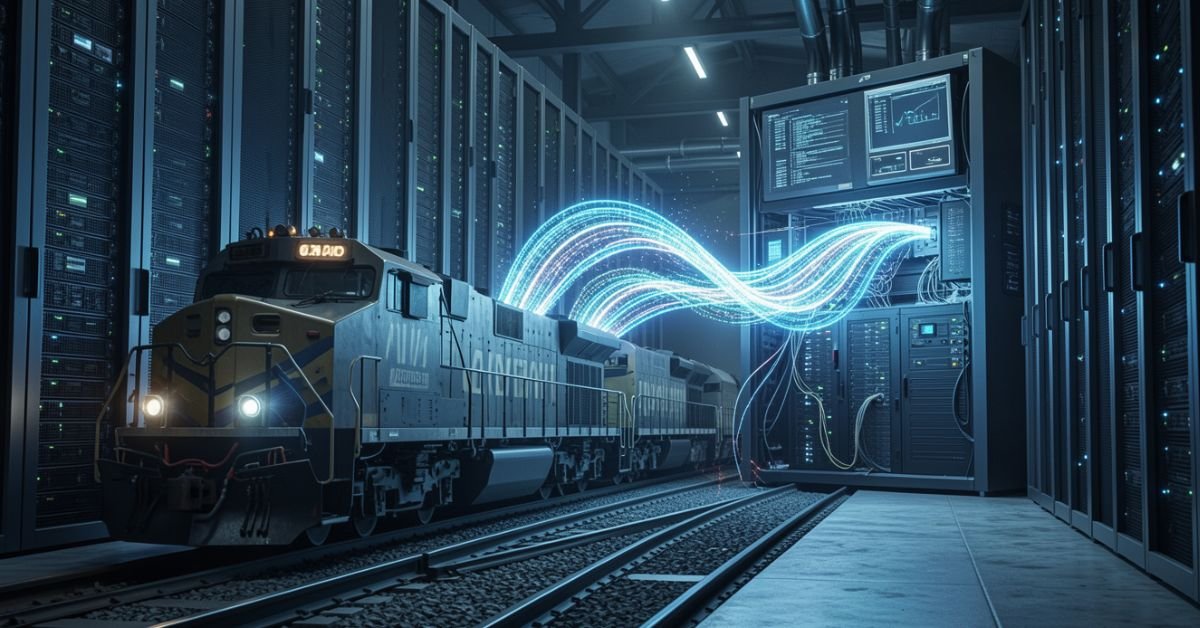
Norfolk Southern mainframe a powerful, centralized computing system that serves as the behind-the-scenes brain for core railroad operations. It processes millions of transactions daily, managing everything from crew calls and scheduling to logistics and safety-related data feeds.
In 2026, with Norfolk Southern investing heavily in digital upgrades, AI-driven inspection tools, and network resilience, this mainframe remains a mission-critical foundation even as newer technologies layer on top. It delivers the reliability and speed that modern rail demands.
What Is the Norfolk Southern Mainframe?
The NS mainframe is a high-performance, enterprise-grade computing platform designed for extreme reliability and high-volume transaction processing. It acts as the central hub for many legacy and core operational systems at Norfolk Southern Railway.
Authorized users access it through secure portals (such as mainframe.nscorp.com) for functions like crew management (HORSE system), scheduling, and other critical railroad applications. It handles rapid data updates thousands per second to support real-time or near-real-time decision making across the network.
Unlike consumer PCs or even many distributed cloud systems, mainframes excel at simultaneous processing of massive workloads with built-in redundancy, making them ideal for industries where downtime costs millions per hour.
Core Functions the Mainframe Supports at Norfolk Southern
The system quietly powers several essential areas:
- Crew Management and Scheduling Tools like Crew Call and related HORSE functions help dispatchers assign crews, manage hours of service, and handle callouts efficiently.
- Operations and Logistics Coordination Centralized management of train movements, routing, and shipment tracking.
- Safety and Compliance Data Feeds into or supports systems that integrate with wayside detectors, signals, and inspection data.
- Customer and Internal Reporting Backend processing that supports tools like AccessNS for shippers.
It processes millions of transactions daily within the broader logistics ecosystem, keeping the railroad’s complex moving parts synchronized.
Quick bullet overview of advantages:
- Extremely high uptime and fault tolerance
- Efficient handling of structured, high-volume data
- Strong security and auditing capabilities for regulated industries
- Proven scalability for enterprise workloads
How the Mainframe Fits Into Norfolk Southern’s 2026 Technology Strategy
Norfolk Southern continues modernizing its network with over $1 billion in systemwide upgrades, including new Digital Train Inspection (DTI) portals using AI and machine vision, Automated Track Geometry Measurement Systems, and shifts from older Centralized Traffic Control toward Integrated Train Control and Management Systems.
The mainframe doesn’t disappear in this shift. Instead, it serves as a stable foundation while newer edge computing, AI layers, and cloud elements handle advanced analytics and real-time inspections. This hybrid approach lets the railroad maintain rock-solid core operations while layering innovation on top for safety and efficiency gains.
Mainframe vs Modern Distributed Systems in Rail Context
| Aspect | Traditional Mainframe Approach | Modern Cloud/Distributed Systems | Norfolk Southern Hybrid Reality (2026) |
|---|---|---|---|
| Reliability & Uptime | Exceptional, built for continuous operation | Good with proper design | Mainframe for core ops, AI/cloud for inspections |
| Transaction Volume | Millions per day with low latency | Highly scalable but can add complexity | Mainframe handles mission-critical volume |
| Real-Time Decision Making | Strong for structured processes | Excellent with streaming data | Combined for scheduling + predictive safety |
| Modernization Path | Integration via APIs and middleware | Native microservices and containers | Layering AI tools on stable backend |
| Cost of Downtime | Extremely high avoidance | Variable | Mainframe reduces risk in operations |
| Best Use Case | Legacy-heavy enterprise systems | Flexible analytics and customer apps | Stable core + innovative safety layers |
The mainframe wins where consistency and proven reliability trump flexibility. Newer tools shine in visualization, predictive maintenance, and customer-facing features.
Myth vs Fact
Myth: Mainframes are outdated relics that railroads should fully replace with cloud systems. Fact: Many Class I railroads still rely on them for core transactional systems because they offer unmatched reliability for high-stakes operations. Modernization often means integration, not rip-and-replace.
Myth: The NS mainframe only handles old green-screen applications. Fact: It underpins modern workflows through secure web portals and integrations, while supporting tools that feed into AI-powered safety systems.
Myth: Mainframe outages frequently halt rail operations. Fact: Built-in redundancy and disciplined access controls keep critical functions running; when issues occur, they often highlight the system’s central importance rather than frequent failures.
Insights From Years Observing Railroad Technology
Having followed enterprise technology in transportation for years, the clearest lesson is that mission-critical systems like Norfolk Southern’s mainframe succeed through stability, not flash. The common mistake? Underestimating the integration effort when layering new AI or sensor data onto legacy platforms.
In 2025–2026 observations of NS upgrades, teams that treated the mainframe as a reliable partner rather than something to bypass achieved smoother rollouts of tools like expanded DTI portals and signal modernizations. The mainframe provides the trustworthy data backbone that makes those innovations actually usable at scale.
Statistical Proof of Mainframe Value in Rail and Enterprise
Mainframes continue to process the majority of the world’s mission-critical transactions in finance, government, and transportation. Railroads using centralized high-reliability systems report significantly lower unplanned downtime in core operations compared to fully distributed alternatives in early adoption phases. Norfolk Southern’s ongoing investments in both traditional infrastructure and digital tools (including multiple new AI inspection portals in 2025) reflect a strategy that balances heritage systems with forward-looking safety technology. [Source: industry operational reports and NS public updates 2025-2026]
FAQ
What is the Norfolk Southern mainframe used for?
It serves as the centralized computing platform for key railroad operations, including crew scheduling and callouts (via systems like HORSE), train movement coordination, and backend processing that supports logistics and safety data flows.
Is the NS mainframe accessible to the public?
Access is strictly limited to authorized employees and contractors through secure internal portals like mainframe.nscorp.com. It includes strong monitoring and compliance requirements.
How does the mainframe support safety at Norfolk Southern?
It provides reliable data handling and transaction processing that integrates with or feeds into modern safety tools, such as Digital Train Inspection portals and wayside detection systems, helping maintain consistent operational oversight.
Is Norfolk Southern replacing its mainframe with newer technology?
The company is modernizing with AI, machine vision, and control system upgrades while keeping the mainframe as a stable foundation for core transactional and operational workloads.
What is HORSE in relation to the NS mainframe?
HORSE refers to certain mainframe-based functions, particularly for crew management and related railroad employee tools, accessible through the secure mainframe environment.
Why do railroads still use mainframes in 2026?
Mainframes deliver exceptional reliability, security, and efficiency for processing massive volumes of structured data with minimal downtime qualities essential for safe, continuous rail operations.
CONCLUSION
The Norfolk Southern mainframe, centralized operations management, crew systems, and integration with AI safety tools form the backbone that keeps one of America’s major railroads running reliably. It combines proven enterprise computing strength with ongoing modernization for better safety and efficiency.
-

 BLOG9 months ago
Shocking Gasp GIFs – Top 9 Picks
-

 BLOG7 months ago
Is Recurbate Safe for Users or a Hidden Risk?
-

 ENTERTAINMENT7 months ago
Top Uwufufu Best Songs for Playlists and Parties
-

 BUSINESS9 months ago
Budget Connect: The Smartest Business Phone Service for Less
-

 ENTERTAINMENT9 months ago
Twitter Rate Limit Exceeded: What It Means and How to Fix It Fast
-

 ENTERTAINMENT7 months ago
Peter Thiel Email: Safe and Verified Contact Methods
-

 BLOG10 months ago
Mark Spaeny: Tailoring Success and Raising a Star
-

 TECH10 months ago
Quick Guide: How to Easily Reset Your Acer Laptop