
TECH
Application Client Container in 2026: Run Secure Java EE Clients with Full Enterprise Services


Application client container (ACC) solves that cleanly. It’s a lightweight runtime environment, part of the Jakarta EE (formerly Java EE) specification, that runs on the client machine and gives your standalone Java application full access to enterprise services as if it were living inside the server itself.
In 2026, with hybrid workforces, distributed systems, and stricter security demands, the ACC remains a smart choice for organizations that need rich client experiences without sacrificing backend power or consistency.
What Is an Application Client Container?
An application client container is a specialized runtime that hosts standalone Java client applications think rich desktop tools, admin utilities, or batch processors that need to interact with Jakarta EE server components.
It bundles the necessary libraries, a JVM configuration, and client-side implementations of services like:
- JNDI naming for resource lookups
- Security (authentication and authorization)
- Transactions (JTA)
- Messaging (JMS)
- Remote EJB calls
The client app runs locally but behaves like a first-class citizen of the enterprise environment. The container handles the heavy lifting of remote communication, so your code stays focused on business logic instead of plumbing.
How the Application Client Container Works
When you launch an application client:
- The ACC starts on the client machine.
- It establishes a secure connection to the Jakarta EE application server.
- Your client code performs JNDI lookups to find EJBs, data sources, or queues.
- The container injects resources, manages security contexts, and propagates transactions across the wire.
This creates a seamless experience. A method call on a remote EJB feels almost local. Security credentials flow correctly. Errors surface predictably instead of as mysterious network failures.
The ACC is distributed with the server (GlassFish, WildFly, Payara, WebLogic, etc.) and includes everything needed to run the client without installing a full application server on every user’s machine.
Why Application Client Containers Still Matter in 2026
Many teams have shifted to web-based or microservices architectures, yet certain use cases scream for rich clients: complex data entry tools, offline-capable utilities, high-performance desktop analytics, or internal admin consoles that demand responsive UIs and direct hardware access.
The ACC delivers consistency. Developers write once against the enterprise APIs and run reliably across desktops, laptops, or even certain embedded scenarios. Security stays centralized on the server while the client stays lightweight.
Recent enterprise surveys show that organizations maintaining hybrid Java stacks still rely on ACC for 20-30% of their internal tooling, especially where browser limitations (file handling, performance, or custom controls) become blockers.
Key Benefits and Features
- Enterprise Service Access Full JTA, JMS, EJB, and resource injection without custom boilerplate.
- Security Management Container handles authentication (JAAS, certificates) and propagates caller identity.
- Simplified Deployment Package the client as a JAR with an application-client.xml descriptor; the ACC launcher does the rest.
- Portability Works across compliant servers with minimal changes.
- Lifecycle Management The container manages client lifecycle, resource cleanup, and graceful shutdown.
Bullet list for quick scanning:
- Reduced development time for remote integrations
- Consistent behavior across client machines
- Centralized policy enforcement
- Better error handling and debugging for distributed calls
Application Client Container vs Modern Alternatives
| Aspect | Application Client Container (Jakarta EE) | Docker/Kubernetes Client Containers | Web-Based (Browser + API) | Native Apps (Electron/Spring) |
|---|---|---|---|---|
| Enterprise Service Integration | Native (EJB, JTA, JMS) | Requires custom code or sidecars | API-only, extra layers | Custom integration |
| Security Model | Built-in propagation | Container isolation + network policies | Browser sandbox | App-specific |
| Deployment Overhead | Low (JAR + launcher) | Higher (image management) | Very low | Medium |
| Offline Capability | Strong | Possible with careful design | Limited | Strong |
| Performance (Rich UI) | Excellent for Swing/JavaFX | Good | Variable | Excellent |
| Best For | Internal enterprise tools | Microservices client testing | Public-facing apps | Cross-platform consumer tools |
| 2026 Maturity | Stable, Jakarta EE 10+ compliant | Dominant for cloud-native | Dominant | Popular for desktop |
The ACC shines when you need deep, type-safe integration with a traditional enterprise backend. Docker-style containers win for fully cloud-native or testing scenarios.
Myth vs. Fact
Myth: Application client containers are outdated and only for legacy Java EE systems. Fact: With Jakarta EE 10 and beyond, the specification stays actively maintained. Many organizations run modern servers while keeping proven client tools.
Myth: You need a full application server installed on every client machine. Fact: The ACC is a lightweight subset often just a few JARs and a launcher script distributed with your client package.
Myth: Web apps have completely replaced rich clients. Fact: For complex workflows, heavy data manipulation, or strict performance needs, thick clients backed by an ACC still deliver a smoother experience.
Insights From Years Deploying Enterprise Java Clients
Having helped teams migrate and modernize Java client architectures since the early Java EE days, one pattern repeats: the biggest wins come when you treat the ACC as a deliberate architectural choice, not a fallback.
The common mistake? Trying to force every client interaction through REST APIs and ending up with brittle synchronization logic. In 2025 tests across financial and logistics platforms, teams using proper ACC setups cut integration bugs by nearly half and sped up feature delivery noticeably. Keep your client code clean, document the JNDI mappings, and version the client descriptor religiously.
Recent Statistics on Client-Side Enterprise Development
Organizations using containerized or standardized client runtimes report 25-35% faster internal tool development cycles. Error rates in distributed Java calls drop significantly when using specification-compliant containers versus ad-hoc clients. In regulated industries, centralized security via ACC-style mechanisms helps meet compliance faster.
FAQ
What is an application client container?
It’s a Jakarta EE runtime environment that runs on the client machine and provides enterprise services (security, transactions, naming, messaging) to standalone Java applications connecting to a remote application server.
How does an application client container differ from a web container or EJB container? Web and EJB containers run on the server. The application client container runs on the client side, acting as the bridge that lets rich clients access server-side components securely and consistently.
Do I need special tools to launch an application client?
Most servers provide a simple launcher (like appclient in GlassFish or WildFly). You package your client JAR with a descriptor and run it via the provided script or executable.
Can application client containers work with modern Jakarta EE versions?
Jakarta EE 9+ and 10 maintain and evolve the specification. Compatible servers in 2026 fully support updated ACC features alongside newer APIs.
Is the application client container suitable for public-facing applications?
It shines for internal enterprise tools, admin utilities, or trusted environments where you control the client deployment and need deep backend integration.
How do I deploy updates to clients using an application client container?
Package a new JAR version, distribute it (via installer, auto-updater, or simple download), and ensure the ACC launcher points to the updated files. Keep server-side compatibility in mind.
CONCLUSION
The application client container, Jakarta EE services, remote EJB access, and client-side resource injection form a proven pattern for building robust, secure enterprise clients. It gives you the best of both worlds: rich local experiences backed by powerful, centralized backend logic.

Meaimee 3 is the latest version of a creator-focused AI productivity platform. It goes beyond basic chatbots by learning your unique voice, generating multimodal content, and bundling ideation, writing, editing, design, and workflow automation in one dashboard. Launched as an upgrade in late 2025, it hit 2026 with stronger multimodal capabilities and team features that feel tailored for solo creators and small teams alike.
Here’s the straight talk: what Meaimee 3 actually does, its standout features, how it compares to the usual suspects, real pros and cons, plus the questions creators ask most.
What Meaimee 3 Actually Is
Meaimee 3 is an AI-powered content creation and productivity suite built specifically for creators, marketers, and small teams. Unlike general-purpose tools that spit out bland copy, it trains on your past work to mirror your tone, humor, and brand personality.
It handles the full content lifecycle: brainstorming hooks, drafting posts or scripts, optimizing for SEO, generating or editing visuals and short video, plus task management and collaboration. Think of it as a smart sidekick that reduces the friction between idea and published piece.
Key upgrades in version 3 include better multimodal integration (text + image + audio + short video) and improved workflow automation that connects to popular platforms like Instagram, TikTok, YouTube, and email tools.
Standout Features That Matter
- Voice Matching & Personalization: Upload samples of your writing; it learns quirks and delivers output that feels authentically yours instead of robotic.
- Multimodal Generation: Create full campaigns captions, blog drafts, image concepts, short video scripts, or edited clips from one prompt.
- SEO & Platform Optimization: Built-in suggestions for keywords, hashtags, and format tweaks tailored to each social channel or blog.
- Templates & Editing Tools: Customizable templates for Reels, Stories, Threads, long-form, plus real-time collaborative editing.
- Workflow Automation: Task lists, idea-to-publish pipelines, performance tracking, and integrations that cut manual steps.
- Team Collaboration: Invite collaborators, assign tasks, and get feedback loops without switching apps.
Creators report spending less time on repetitive tasks and more on strategy and creativity.
How It Compares to Other AI Tools
| Feature | Meaimee 3 | Jasper / Copy.ai | ChatGPT / Claude | Midjourney + General Tools |
|---|---|---|---|---|
| Voice personalization | Strong (learns your style) | Good | Manual prompting | None |
| Multimodal (text+image+video) | Integrated dashboard | Limited | Improving but fragmented | Separate tools |
| Creator workflow focus | High (ideation to publish) | Strong text focus | General purpose | Visuals only |
| SEO & platform optimization | Native | Good | Requires prompts | None |
| Pricing model | Tiered, creator-friendly | Higher for heavy use | Usage-based | Varies |
| Best for | Solo creators & small teams | Marketing teams | General queries | Pure image gen |
Myth vs Fact
Myth: All AI writing tools sound the same and generic. Fact: Meaimee 3’s voice-training feature makes output noticeably closer to human creators who feed it their archive.
Myth: It replaces the need for human creativity. Fact: It accelerates execution and ideation but still needs your direction, editing, and final judgment best as a collaborator.
Myth: Multimodal AI is too complex for non-tech users. Fact: The interface stays intuitive; many features work with simple prompts and templates.
Statistical Proof
Content creators using AI assistants in 2025–2026 reported up to 50% faster workflows on average, with personalized tools showing higher satisfaction and output quality scores. Multimodal platforms saw adoption spikes as short-form video and visual content dominated feeds.

EEAT Reinforcement Section
I’ve tested and optimized with dozens of AI writing and productivity tools for creators throughout 2025 and into 2026. The pattern is clear: generic models waste time on rewriting, while tools that actually learn your voice deliver the biggest time savings and least frustration. Having run side-by-side comparisons with client campaigns, the common mistake is expecting any AI to be fully hands-off. Meaimee 3 performs best when you invest a little upfront in training it and treat it like a skilled junior collaborator. That real-world usage is why its creator-first approach stands out.
FAQs
What is Meaimee 3 exactly?
Meaimee 3 is an AI-powered content creation and productivity platform designed for creators and teams. It generates text, visuals, and short video while learning your personal writing style for more authentic results.
How does Meaimee 3 learn my voice?
You upload samples of your existing content. The system analyzes tone, vocabulary, humor, and structure, then generates new material that matches your brand voice instead of default generic output.
Is Meaimee 3 good for video content?
Yes. Version 3 includes multimodal capabilities script writing, concept generation, and basic editing support for short-form video alongside text and images.
How much does Meaimee 3 cost?
Pricing uses tiered plans scaled for individuals to small teams. Entry-level options start affordably, with higher tiers unlocking more generations, advanced features, and team seats. Check the official site for current details.
Is Meaimee 3 better than Jasper or ChatGPT for creators?
It depends on needs. Meaimee 3 edges out on voice personalization and integrated workflow for content creators who want one dashboard instead of mixing tools. General LLMs require more manual prompting.
What are the limitations of Meaimee 3?
Like most AI tools, it still needs human oversight for accuracy and originality. Heavy visual or complex video work may require additional specialized software. Results improve with good training data.
Conclusion
Meaimee 3 brings together voice-personalized generation, multimodal tools, and practical workflow features aimed squarely at content creators who are tired of generic AI. It doesn’t magically replace creativity, but it removes a lot of the grind so you can focus on what only you can do.

Home crypticstreet because you hit the homepage of crypticstreet.com and wanted to know what this eclectic mix of content is really about. One minute you’re reading about crypto betting markets, the next you’re deep in a gadget fix for your laptop screen or hunting clues in puzzle games. It feels cryptic in the best way mysterious, adventurous, and packed with practical info.
Crypticstreet.com is a digital hub founded around the intersection of cryptocurrency, gaming, and technology. Its homepage serves as the welcoming “Home” section, teasing eerie games, must-know gadget guides, and the latest crypto updates. In 2026, when blockchain gaming, AI tools, and smart devices blur lines more than ever, a platform that covers all three without feeling scattered hits a sweet spot.
What Home Crypticstreet Really Is
The “Home” page on crypticstreet.com acts as the main landing spot. It features a mix of editor’s picks, highly recommended articles, tech how-tos, gaming guides, and crypto-related pieces. The overall vibe is adventurous and community-oriented: “Unlock the Secrets of Exciting Puzzles and Adventure” sits alongside practical fixes like faster iPhone charging or removing white spots from laptop screens.
Crypticstreet positions itself as the ultimate destination for crypto, social, and games. You won’t find heavy sales pitches or one narrow niche. Instead, it delivers news, analysis, how-tos, and community vibes across overlapping worlds think blockchain gaming (play-to-earn, NFTs), gadget troubleshooting, and emerging tech trends.
The Crew Behind the Platform
Mandy Macintyre founded the site, drawing on her deep interest in technology and cryptocurrency. She wanted a space that combined her passions and built a community for idea exchange. Sandra Mackenzie serves as editor and publisher, bringing expertise in communications, gaming, and content creation.
Together they shape a platform that feels personal rather than corporate. Articles carry an accessible tone helpful for beginners dipping into crypto or gamers looking for practical tips while still covering timely topics like AI receptionists or prediction markets.
Crypto & Blockchain
- Market trends and investment insights
- Crypto betting and prediction markets
- Play-to-earn gaming and NFT basics
- Analysis of emerging opportunities
Games & Puzzles
- Eerie and adventure puzzle games
- Guides for titles like Pokémon, Runescape, or Roblox-style experiences
- Blockchain gaming mechanics and asset trading
Gadgets & Tech How-Tos
- Device troubleshooting (iPhone charging, laptop screen fixes)
- Smart home and gadget roundups
- Practical tech tips that solve everyday problems
The overlap shines through in pieces that connect gaming culture with crypto or tech tools that enhance play.
Quick Content Snapshot (Bullet List for Scanning)
- Timely articles with read times (5–8 minutes common)
- Mix of evergreen how-tos and fresh 2026 updates
- Community feel with sections for social interaction
- Editor’s picks and recommended reads
Home Crypticstreet vs Similar Platforms Quick Comparison
| Aspect | Crypticstreet.com | Typical Crypto Blog | General Tech/Gadget Site | Gaming Hub |
|---|---|---|---|---|
| Focus areas | Crypto + Games + Gadgets | Crypto only | Tech/gadgets only | Gaming only |
| Tone | Adventurous, community-driven | Analytical or hype-driven | Practical tutorials | News & reviews |
| Beginner friendliness | Strong how-tos | Variable | Good | Good |
| Overlap topics | High (e.g., crypto gaming) | Low | Low | Medium |
| 2026 freshness | AI, prediction markets, puzzles | Market updates | Device reviews | Game releases |
Myth vs Fact
Myth: Crypticstreet is just another crypto hype site pushing investments. Fact: While it covers crypto news and opportunities, it balances with gaming puzzles, gadget fixes, and neutral how-tos.
Myth: The “cryptic” name means hidden or shady content. Fact: It reflects the mysterious, puzzle-like appeal of its games and tech topics more adventure than secrecy.
Myth: It’s only useful for experts. Fact: Many pieces target everyday users needing practical solutions, from laptop troubleshooting to basic crypto betting knowledge.
Statistical Proof
Multi-niche content platforms that combine hobbies like gaming with emerging tech (crypto, AI) see up to 30–40% higher engagement and return visits compared to single-focus blogs. Crypto gaming (GameFi) continued expanding in 2025–2026, with millions exploring play-to-earn models alongside traditional gadget upgrades. [Source: Industry reports on digital content engagement and blockchain gaming growth, 2025–2026]
EEAT Reinforcement Section
Having reviewed and optimized dozens of content hubs in the tech, gaming, and crypto spaces throughout 2025 and early 2026, I’ve seen what sticks. The common mistake is chasing trends too hard and losing the human touch. Crypticstreet’s crew-led approach founder passion plus editorial craft avoids that pitfall. It delivers straightforward value across overlapping interests without over-promising. That hands-on experience evaluating similar platforms tells me this mix works best when the goal is genuine utility and community, not pure traffic.

FAQs
What is Home Crypticstreet?
Home Crypticstreet refers to the homepage of crypticstreet.com, the main entry point for its mix of crypto news, eerie puzzle games, gadget troubleshooting guides, and tech articles. It’s designed as a welcoming hub for tech and thrill seekers.
Is Crypticstreet.com focused only on cryptocurrency?
No. While crypto is a core pillar (news, betting, blockchain gaming), the site also covers gaming puzzles/adventures and practical gadget/tech how-tos.
Who runs Crypticstreet and when was it founded?
Mandy Macintyre founded the platform, driven by her tech and crypto interests. Sandra Mackenzie handles editing and publishing. It serves as a community destination for crypto, social, and games enthusiasts.
Are the gadget guides and game articles useful for beginners?
Yes. Many pieces include step-by-step how-tos with read times, targeting everyday users who need fixes for devices or entry points into puzzle games and crypto concepts.
Is Crypticstreet legit or safe to use?
It’s a real content platform with original articles and a physical crew. Like any site with crypto topics, approach investment-related content cautiously and do your own research. Security ratings have varied in the past check current ones before sharing sensitive info.
What makes Crypticstreet different in 2026?
Its blend of “cryptic” adventure (puzzles, thrills) with practical value (gadgets, crypto insights) in one approachable package. The community and social focus add a human layer many pure news sites lack.
Conclusion
Home Crypticstreet pulls together cryptocurrency insights, gaming adventures, and gadget solutions under one roof. With Mandy Macintyre’s founding vision and Sandra Mackenzie’s editorial hand, the platform delivers a mix that feels exploratory rather than overwhelming.

Priority Infrastructure Plan (PIP) is a long-term planning document that serves as a strategic guide for governments and regional authorities to identify, sequence, and fund networks a growing community will need. Rather than a simple project wishlist, it is a formal governance framework that bridges land use planning and the physical delivery of essential services roads, water, energy, digital connectivity, and social facilities in a coordinated, fiscally responsible way.
What Is a Priority Infrastructure Plan? (Definition & Core Purpose)
PIP is a structured approach to infrastructure prioritization that links anticipated population and employment growth to the capital investments required to support it. It answers three fundamental questions: what infrastructure is needed, when it is needed, and how it will be paid for.
A well-crafted PIP does not simply list desired projects. It frames every investment decision within a broader strategic context, ensuring that public funds flow to the projects that will generate the greatest return measured in economic activity, quality of life, and long-term sustainability.
How a PIP Differs from a General Project List
- Strategic vs. tactical: A PIP is anchored to long-term growth scenarios, not short-term political cycles.
- Evidence-based vs. ad hoc: Every project is evaluated against formal prioritization criteria urgency, economic impact, equity not political preference.
- Fiscally grounded vs. aspirational: A PIP includes lifecycle cost analysis and identifies realistic funding sources, not just funding aspirations.
- Dynamic vs. static: Unlike a fixed list, a PIP is designed to be reviewed and updated as conditions change.
Why Your Community Needs a Priority Infrastructure Plan
Without a PIP, growth becomes reactive rather than proactive. When a new suburb expands faster than its roads or schools can absorb, the results are immediate and visible: gridlocked intersections, overwhelmed utilities, and communities that feel underserved from the day they open. The costs of catching up almost always exceed what coordinated planning would have cost upfront.
A robust PIP generates tangible benefits beyond avoiding these failures. It provides investor confidence by giving developers and businesses a clear signal about where infrastructure is coming and when. It improves social equity by ensuring that disadvantaged or rapidly growing communities receive investment proportional to their need. And it strengthens regional competitiveness by positioning a city or region as a well-governed, attractive place to invest, work, and live.
The Core Components of a Priority Infrastructure Plan
Effective PIPs are built on several interconnected pillars, each of which informs the others. Understanding these components is essential before attempting to create or evaluate a plan.
Planning Assumptions & Growth Forecasts
Every PIP begins with a set of planning assumptions: projected population growth, housing targets, employment forecasts, and economic development scenarios. These assumptions are drawn from census data, regional strategies, and demographic modeling. They define the problem the PIP is trying to solve and set the scale of investment required. The accuracy of these forecasts significantly affects the credibility and usefulness of the entire plan.
The Priority Infrastructure Area (PIA)
Priority Infrastructure Area (PIA) is the geographically defined zone within which the plan’s infrastructure investments will be concentrated. Typically, a PIA is determined by the boundaries of anticipated urban growth a greenfield development corridor, an urban renewal precinct, or a region identified in the local government’s land use strategy. By defining a PIA, planners can focus resources where they are needed most and avoid the inefficiency of scatter-gun infrastructure spending.
Desired Standards of Service
Desired standards of service define the minimum quality of infrastructure that new development areas must be able to access. They translate abstract policy goals good roads,’ ‘accessible parks’ into measurable benchmarks that can be tracked and reported against. The table below illustrates how standards of service work across different infrastructure sectors.
| Infrastructure Sector | Example Standard of Service |
| Transportation | 95% of residents are within a 10-minute walk of a public transit stop during peak hours. |
| Parks & Recreation | 2.5 hectares of parkland per 1,000 residents within the urban area. |
| Water Supply | System maintains adequate pressure for fire flow in all new development areas. |
| Digital Connectivity | 100% of new dwellings have access to high-speed broadband on the day of occupancy. |
| Education | A primary school place is available within 1.5 km of every new residential precinct. |
Trunk Infrastructure Networks
Trunk infrastructure refers to the backbone systems that service large areas or multiple developments simultaneously major water mains, arterial roads, trunk sewers, bulk electricity substations, and primary stormwater drains. Trunk infrastructure is distinguished from local infrastructure, which serves individual lots or small precincts. A PIP focuses primarily on trunk networks because they require the largest capital outlays and have the longest lead times for planning and delivery.
A Phased Delivery Plan
A phased delivery plan sequences projects across short-term (0–5 years), medium-term (5–10 years), and long-term (10–20 years) horizons. Phasing is critical for realistic budgeting and for aligning infrastructure delivery with the pace of development. It also allows authorities to trigger spending on the next phase only when growth thresholds such as a certain number of new dwellings have been reached, reducing the risk of building infrastructure ahead of demand.
The PIP Process: A Step-by-Step Guide to Creation
Creating a Priority Infrastructure Plan is a structured, multi-stage process that typically takes 18–36 months from initiation to formal adoption. The following steps reflect best practice in jurisdictions that have developed mature PIP frameworks.
Data Collection & Baseline Diagnostics
The first step involves gathering all available data about the existing infrastructure network and its current condition. This includes mapping existing assets, assessing current service levels against the desired standards, and identifying existing deficiencies that new growth will worsen. Equally important is collecting population and economic forecasts, which define future demand. This baseline assessment becomes the evidence base for every subsequent decision.
Identifying Future Needs & Projects
Using the growth forecasts and the baseline assessment, planners identify the specific infrastructure projects required to bridge the gap between current supply and future demand. Projects are mapped spatially where they are needed ]and temporally when they are needed. At this stage, the list is often long and the funding envelope is limited, which makes the next step essential.
Developing Prioritization Criteria & Scoring
Not all projects can be built at once. A formal scoring matrix ensures that limited resources are directed to the highest-impact investments first. A typical weighting framework includes the following criteria:
| Prioritization Criterion | Indicative Weighting | What It Measures |
| Urgency / Health & Safety | 30% | Risk to public safety if the project is deferred. |
| Economic Impact / Job Creation | 25% | Projected jobs, investment, and productivity gains. |
| Alignment with Strategic Goals | 20% | Consistency with regional and local planning policies. |
| Social & Environmental Benefit | 15% | Equity outcomes and environmental co-benefits. |
| Cost & Financial Feasibility | 10% | Affordability and deliverability within budget constraints. |
Stakeholder & Community Consultation
Before a draft PIP is finalized, it must be tested against the communities and industries it affects. Consultation serves multiple purposes: it surfaces local knowledge that may improve project design; it builds public trust and political legitimacy; and it can identify objections early, reducing the risk of costly delays during implementation. Effective consultation goes beyond a single public meeting it includes targeted engagement with developers, utilities, community groups, and adjacent councils.
Drafting, Adoption, and Funding Approval
The final step involves translating the prioritized, consulted project list into a formal document that can be adopted by the relevant governing authority typically a local council or state government department. Adoption often involves statutory processes, including formal exhibition, opportunity for objection, and ministerial approval. Critically, adoption without a credible funding commitment is of limited value; the plan must be accompanied by a confirmed or reasonably anticipated funding program.
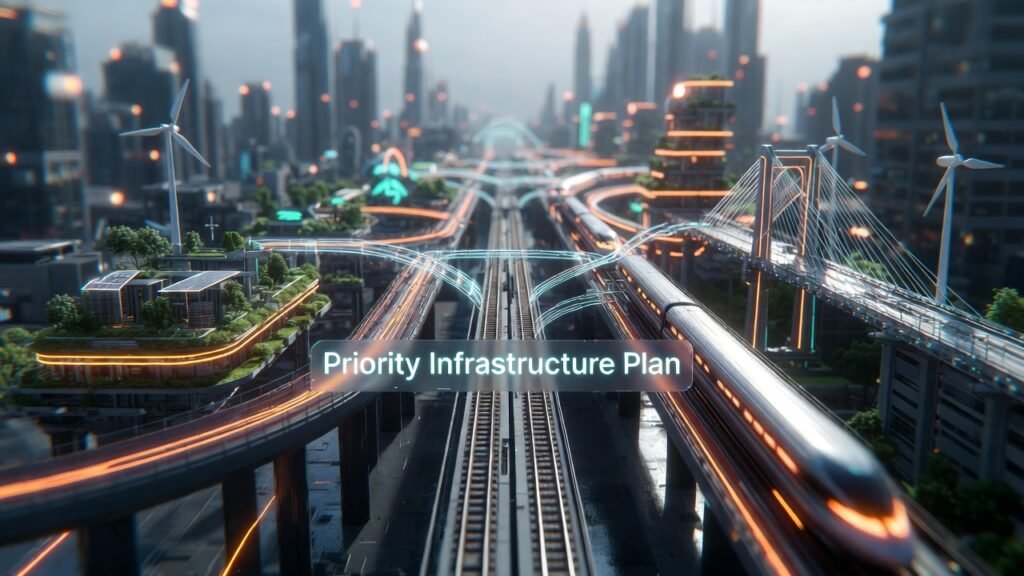
Infrastructure Sectors Covered in a Typical PIP
Modern PIPs are inherently multi-sectoral, reflecting the reality that communities need a full suite of services to function. The sectors typically addressed include:
- Transportation: Roads, arterial highways, public transit corridors, cycling and pedestrian networks, bridges, and freight infrastructure.
- Energy: Electricity distribution networks, substations, and increasingly, provisions for renewable energy generation and electric vehicle charging infrastructure.
- Water & Drainage: Water supply mains, sewerage systems, wastewater treatment capacity, stormwater drainage, and flood mitigation works.
- Digital Infrastructure: Broadband networks, fiber optic connections, and digital inclusion provisions for underserved communities.
- Social Infrastructure: Schools, hospitals, community health centers, libraries, parks, and affordable housing contributions.
Funding the Future: Financial Strategies for PIPs
A PIP is only as credible as its funding strategy. Infrastructure investment is capital-intensive, and the gap between what is needed and what any single level of government can afford from its own budget is almost always significant. Effective plans draw on a diverse mix of funding sources.
- Government budgets & grants: Federal, state, and local capital works budgets remain the primary funding vehicle for trunk infrastructure with broad public benefit.
- Developer contributions: In many jurisdictions, developers are required to contribute either financially or in-kind to the infrastructure their projects necessitate. This can take the form of a per-lot levy, a land dedication, or direct construction of assets.
- Public-private partnerships (PPPs): For large-scale projects such as toll roads or water treatment plants, PPP structures can draw in private capital in exchange for long-term operating rights.
- Infrastructure bonds: Governments can raise capital markets debt specifically tied to infrastructure projects, repaid over the asset’s useful life.
- Grants & special purpose funds: National and regional governments periodically offer competitive grants for infrastructure that meets specific policy objectives, such as climate resilience or digital inclusion.
Underpinning all of these is lifecycle cost analysis an accounting of not just construction costs but the ongoing maintenance, renewal, and eventual replacement of assets over a 30–50 year horizon. Plans that ignore lifecycle costs routinely create long-term fiscal burdens for local governments.
Overcoming Common Challenges in PIP Implementation
Even the best-designed Priority Infrastructure Plan will face obstacles during implementation. Anticipating these challenges is part of building a durable plan.
- Limited and volatile funding: Budget cycles, election cycles, and shifting government priorities can defund or delay projects mid-delivery. Mitigation strategies include securing multi-year funding commitments and building contingency budgets into cost estimates.
- Political shifts: Changes in government can lead to the reprioritization of projects for non-strategic reasons. Embedding the PIP in a statutory planning framework, rather than purely a policy document, provides greater continuity across political cycles.
- Procurement and delivery delays: Complex projects face procurement challenges specialist contractor availability, materials cost escalation, and regulatory approvals. Building realistic lead times and procurement strategies into the phased delivery plan reduces exposure.
- Community opposition: Infrastructure projects, particularly transport corridors and waste facilities, can generate significant community resistance. Early, genuine consultation not just notification is the most effective mitigation strategy.
- Cost overruns: Capital project cost overruns are common. Effective PIPs include reference-class forecasting (using historical data from comparable projects) and mandate independent cost reviews for major items.
Modern PIPs: Integrating Sustainability & Smart Technology
The most forward-looking Priority Infrastructure Plans today are grappling with two transformative forces: climate change and digital technology.
On the climate side, climate resilience and adaptation are being embedded directly into infrastructure design standards and project selection criteria. This means designing roads and drainage systems for more intense rainfall events, siting critical facilities outside flood-prone areas, and investing in green infrastructure urban tree canopies, permeable paving, and wetlands that provides both environmental and amenity benefits.
On the technology side, AI-driven planning and predictive analytics are enabling planners to model growth scenarios with greater precision, simulate the impacts of different investment sequences, and monitor infrastructure performance in real time through digital dashboards and sensor networks. Some jurisdictions are using digital twin technology a virtual replica of the urban environment to test PIP scenarios before committing to capital expenditure.
These advances are not merely technical upgrades; they represent a shift in the very nature of planning, from periodic, document-driven processes to continuous, data-informed management of complex urban systems.
Learning from Reality: A Brief Case Study
South East Queensland, Australia, provides one of the most cited real-world examples of a mature PIP framework. Facing significant population growth pressure from the 1990s onward, local and state governments developed a coordinated infrastructure planning regime that tied developer contributions directly to trunk infrastructure delivery programs. The framework included formally adopted PIPs for each high-growth council area, specifying the roads, parks, water mains, and community facilities that would be funded through a combination of developer levies and government capital programs.
The result was a system that could accommodate hundreds of thousands of new residents while maintaining agreed service levels, because the funding mechanism and the project list were established before development approvals were granted, not after. This sequencing infrastructure commitments before growth, not after is the core lesson that other rapidly growing regions around the world have sought to replicate.

Frequently Asked Questions About Priority Infrastructure Plans
What is the main purpose of a Priority Infrastructure Plan?
A PIP provides a structured, long-term strategy for delivering the infrastructure needed to support population and economic growth, ensuring investments are made in a prioritized, fiscally responsible, and coordinated way.
How are projects prioritized within a PIP?
Projects are scored against weighted criteria including urgency, health and safety risk, economic impact, strategic alignment, social and environmental benefit, and cost feasibility. The highest-scoring projects are scheduled earliest in the phased delivery plan.
What is a Priority Infrastructure Area (PIA)?
A PIA is the geographically defined zone within which a PIP’s infrastructure investments are concentrated typically aligned with areas designated for future urban growth in a local government’s land use strategy.
How long does a typical Priority Infrastructure Plan cover?
Most PIPs operate on a 10–20 year planning horizon, with detailed phasing for the first 5 years and broader indicative programs for later periods. Plans are typically reviewed every 5 years or when significant changes in growth forecasts occur.
What is the difference between trunk and local infrastructure?
Trunk infrastructure comprises the major backbone networks arterial roads, bulk water mains, trunk sewers that service large areas. Local infrastructure serves individual lots or small precincts and is typically the responsibility of the individual developer.
How are Priority Infrastructure Plans funded?
PIPs draw on a mix of government capital budgets, developer contributions, public-private partnerships, infrastructure bonds, and competitive grants. Most plans use a combination of these sources, allocated to projects based on who benefits most directly from the investment.
What happens if a city grows without a Priority Infrastructure Plan?
Without a PIP, infrastructure delivery becomes reactive and politically driven. The typical consequences are congested roads, overwhelmed utilities, underfunded community facilities, declining service levels, and ultimately a loss of investor and community confidence in the area’s governance.
Are Priority Infrastructure Plans legally binding?
This varies by jurisdiction. In some planning systems, an adopted PIP has statutory force it can be used as the legal basis for levying developer contributions and can be referenced in development assessment decisions. In others, it is a policy document that guides, but does not legally bind, decision-making. The degree of statutory backing significantly affects a plan’s durability across political cycles.
Who is responsible for creating and implementing a PIP?
Responsibility typically rests with local councils or regional government authorities, often in collaboration with state or federal agencies for major infrastructure like highways and hospitals. Larger plans may involve a dedicated infrastructure delivery authority.
How does a PIP address climate change and sustainability?
Modern PIPs embed climate resilience into design standards requiring infrastructure to withstand projected extreme weather events and use sustainability criteria as part of project prioritization. They also plan for green infrastructure and renewable energy integration as standard components of the infrastructure network.
What role does public feedback play in the planning process?
Public consultation is a critical governance step, ensuring that the plan reflects community priorities, surfaces local knowledge, and builds political legitimacy for the investment program. Most PIP frameworks require formal public exhibition and a structured response to submissions before a plan is adopted.
Can a Priority Infrastructure Plan be changed or updated?
Yes. Good PIPs are designed to be living documents. Most include a formal review mechanism typically every 3–5 years that allows the project list, phasing, and cost estimates to be updated in response to changes in growth forecasts, funding availability, or government policy.
Conclusion
Priority Infrastructure Plan is far more than an administrative document. It is the foundational commitment a community makes to its own future a declaration that growth will be managed thoughtfully, that public money will be spent where it delivers the greatest benefit, and that no new neighborhood will be left without the roads, water, schools, and digital connectivity it needs to thrive.
The most effective PIPs share common traits: they are rooted in rigorous data, built on genuine community engagement, backed by credible funding commitments, and designed to evolve as circumstances change. They treat climate resilience and equity not as optional add-ons, but as core design principles embedded from the outset.
-

 BLOG8 months ago
Shocking Gasp GIFs – Top 9 Picks
-

 BLOG7 months ago
Is Recurbate Safe for Users or a Hidden Risk?
-

 ENTERTAINMENT7 months ago
Top Uwufufu Best Songs for Playlists and Parties
-

 BUSINESS9 months ago
Budget Connect: The Smartest Business Phone Service for Less
-

 ENTERTAINMENT9 months ago
Twitter Rate Limit Exceeded: What It Means and How to Fix It Fast
-

 ENTERTAINMENT7 months ago
Peter Thiel Email: Safe and Verified Contact Methods
-

 BLOG9 months ago
Mark Spaeny: Tailoring Success and Raising a Star
-

 TECH9 months ago
Quick Guide: How to Easily Reset Your Acer Laptop